
Last Updated: September 11, 2026
What Reliable Construction Debris Removal in Harrisonburg Includes
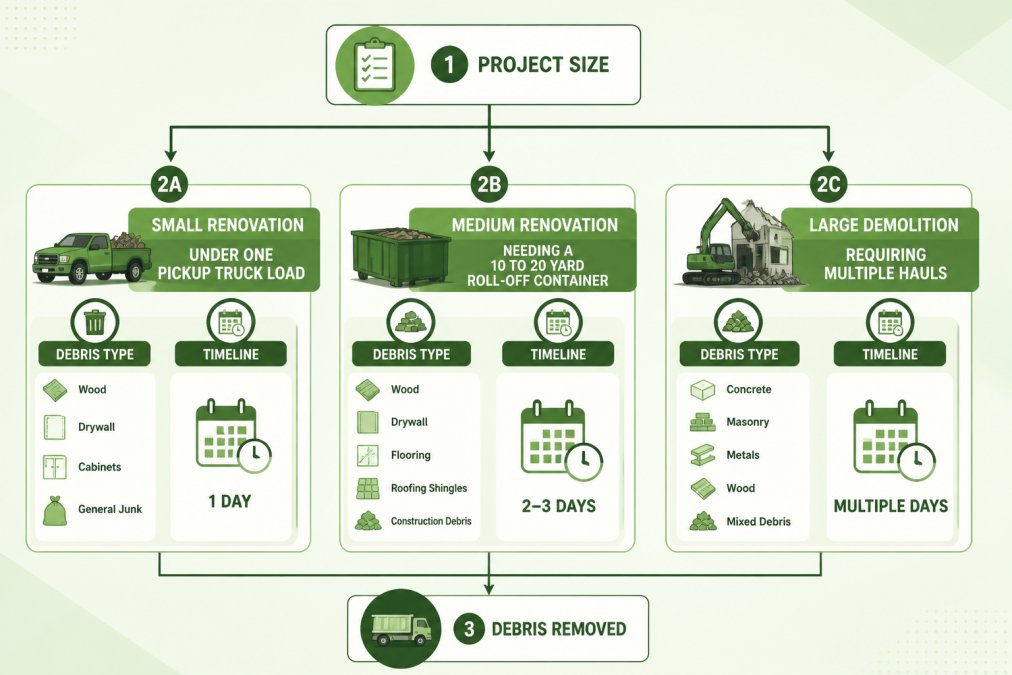
Reliable construction debris removal in Harrisonburg means collecting, loading, hauling, and disposing of renovation and demolition waste via roll-off container rental or full-service hauling. Castro Junk Removal LLC has served Rockingham County contractors since 2018.
| Service Model | Best For | You Load It? | Timeline |
|---|---|---|---|
| Roll-off container rental | Multi-week renovations with steady debris | Yes | Delivered, then swapped on your schedule |
| Full-service debris hauling | One-time cleanouts and tight deadlines | No | Same-day or next-day pickup |
| Curbside bulk waste collection | Small residential loads only | Yes | Fixed municipal collection days |
Renting a container for a one-truckload project means paying for unused capacity; full-service hauling fits finite loads and tight schedules.
How to Dispose of Old Appliances After a Renovation
Old appliances need separate handling from general construction debris because of refrigerants, oils, and metals. Disposal follows four paths: retailer haul-away, municipal bulk waste collection, a scrap metal recycler, or a full-service junk removal company.
- Retailer haul-away: Convenient with a new purchase, but availability varies.
- Curbside bulk waste collection: Budget-friendly, but fixed windows and exclusions.
- Scrap metal recycler: Often free, but you transport it.
- Full-service removal: Highest convenience, no lifting.
Refrigerators, freezers, and AC units contain refrigerants that must be recovered before scrapping (the EPA).
Before scheduling any pickup, photograph the appliance and note its type and approximate size. Removal teams quote faster and more accurately when they know whether they’re handling a mini-fridge or a side-by-side refrigerator with an ice maker.
Mattresses are commonly refused at curbside collection, so plan for them separately.
Construction Waste Disposal Regulations You Need to Know
Construction waste disposal regulations govern what can go in a landfill, what must be recycled, and what needs special handling, covering prohibited materials, permits, load limits, and fees. Construction and demolition debris is a regulated waste stream distinct from household trash, accepted only at designated facilities, with some materials banned from landfill disposal entirely. As documented in EPA guidance on construction and demolition debris, construction and demolition materials make up a significant share of the national waste stream, and the agency maintains separate guidance for their management and diversion.
For permit requirements, check with the local building or zoning office before placing a container on a public street or right-of-way, since a container placed without a permit can be cited or removed. For state-level rules, the Virginia Department of Environmental Quality waste management program publishes permitting and disposal guidance for demolition debris, yard debris, and other regulated waste streams.
Hazardous material identification is where most DIY removals go wrong: never put asbestos, lead paint dust from pre-1978 structures, fluorescent tubes and ballasts, liquid solvent/paint/adhesive containers, or treated lumber in a standard debris container.
Mixing hazardous materials into a general debris load can cause the entire load to be rejected at the landfill, which means you pay for the haul and still have the waste on site. Identify suspect materials before the container arrives, not after it’s loaded.
DIY vs. Professional Removal: A Cost-Benefit Check
DIY removal saves money only on small, clean, single-material loads where you own a truck and trailer; dump fees, fuel, trailer rental, and labor usually erase the savings. Professional removal wins on mixed loads, heavy materials like concrete and roof tear-offs, upper-floor debris, and any project with a deadline.
The break-even point is usually one trailer load. Below that, DIY can pencil out. Above it, the labor and dump fees typically erase the savings, and a professional haul keeps your crew on the actual renovation instead of the dump run.
Concrete is heavy, often recycled rather than landfilled, and weight limits are strict, a half-full container may already be at its limit, and dense roof shingles cause the same problem.
Scheduling and Load Size: What to Plan For
Scheduling works best when you can answer three questions: how much debris, what type, and by when. On-demand pickup offers same-day or next-day windows for smaller loads; roll-off containers need lead time, so book the haul before a fixed-date cleanout starts. Most providers quote by volume, so request a written estimate based on photos or an on-site look.
Walk the debris pile and separate it into three groups before anyone quotes it: heavy material (concrete, dirt, shingles), bulky material (furniture, appliances, carpet), and light material (cardboard, drywall, insulation). This one step prevents surprise charges and gets you a more accurate estimate on the first call.
Separating clean cardboard, scrap metal, and untreated wood for recycling cuts landfill volume and can lower disposal fees; yard debris is usually handled separately.
Full Cleanouts Beyond the Job Site
Construction debris is often one piece of a larger cleanup, and garage, estate, and hoarder cleanouts produce mixed waste streams. For property managers and landlords, schedule the haul first, then clean out, one provider who takes paint cans, scrap lumber, and a broken water heater saves coordination.
